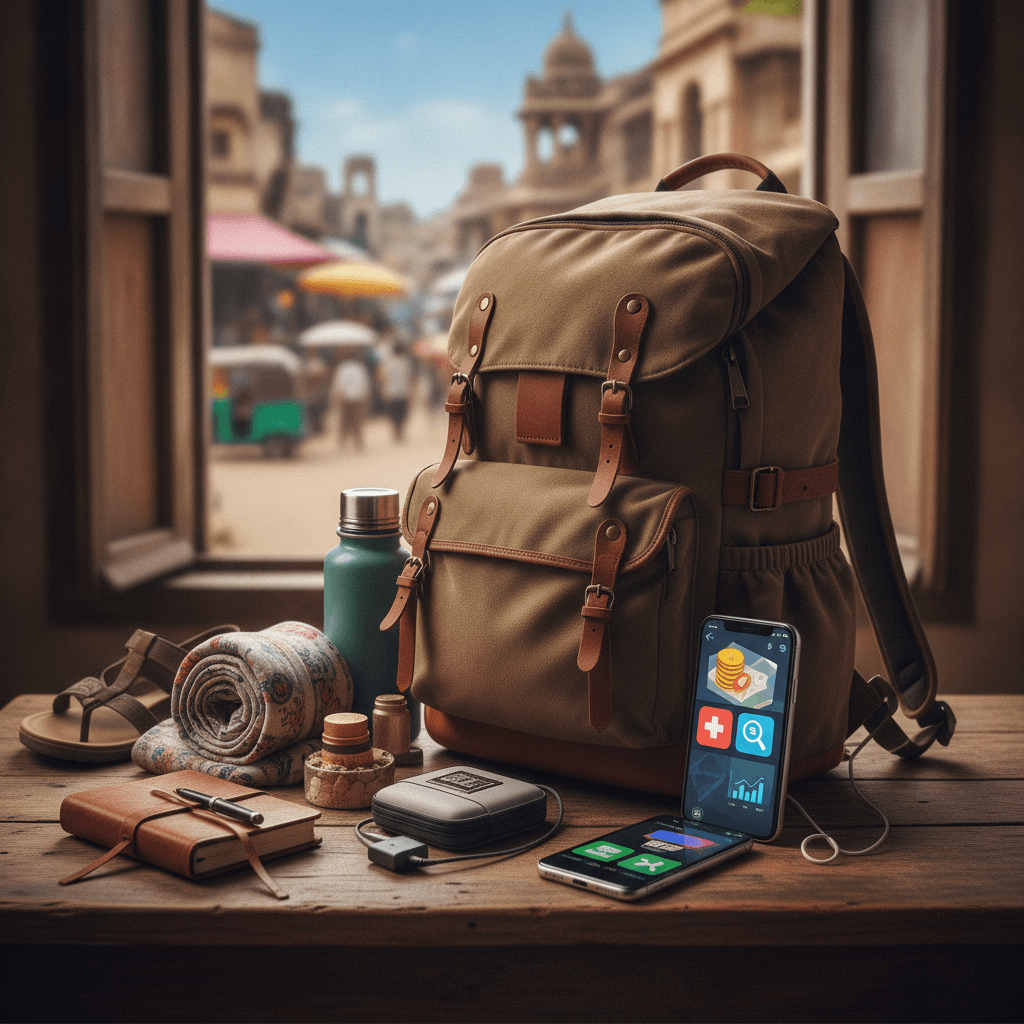
Master solo budget travel in India with expert packing tips and top money-saving apps. Uncover the power of UPI for an affordable, authentic journey.
Key takeaways
Strategic minimalist packing is crucial for solo budget travel in India, reducing physical and financial burdens while enhancing agility and immersion.
India's Unified Payments Interface (UPI) is a transformative tool for budget travelers, facilitating instant, fee-free micro-transactions and offering unparalleled financial flexibility, with a 79.6% share in retail payment volumes in 2023-24.
Essential money-saving apps like PhonePe, Paytm, and Money View, combined with travel booking platforms like MakeMyTrip and Skyscanner, are vital for managing expenses and securing affordable deals.
Solo travelers in India can achieve an average daily budget of ₹1,000-₹1,250 by utilizing budget accommodations, local street food, and cost-effective public transport like Indian Railways and city metros.
Prioritizing safety through research, modest dressing, trusted transportation (Ola/Uber), and relying on intuition is paramount for a secure and enriching solo journey in India.
Essential Packing & Money-Saving Apps for Solo India Travel
Strategic minimalist packing is crucial for solo budget travel in India, reducing physical and financial burdens while enhancing agility and immersion.
India's Unified Payments Interface (UPI) is a transformative tool for budget travelers, facilitating instant, fee-free micro-transactions and offering unparalleled financial flexibility, with a 79.6% share in retail payment volumes in 2023-24.
Essential money-saving apps like PhonePe, Paytm, and Money View, combined with travel booking platforms like MakeMyTrip and Skyscanner, are vital for managing expenses and securing affordable deals.
Solo travelers in India can achieve an average daily budget of ₹1,000-₹1,250 by utilizing budget accommodations, local street food, and cost-effective public transport like Indian Railways and city metros.
Prioritizing safety through research, modest dressing, trusted transportation (Ola/Uber), and relying on intuition is paramount for a secure and enriching solo journey in India.
For a solo budget journey in India, essential packing tips revolve around strategic minimalism, focusing on versatile clothing, compact toiletries, and vital safety items, while money-saving apps leverage India's robust digital payment ecosystem to facilitate seamless, cost-effective transactions and smart travel bookings. This guide, authored by Devendra Singh, a travel blogger with over 6 years of experience specializing in budget and adventure trips across India, provides a definitive framework for young, experience-driven travelers to maximize their journey's value and authenticity.
The solo budget journey in India is not merely an exercise in frugality, but a strategic immersion amplified by two often-underestimated factors: hyper-efficient minimalist packing and the revolutionary power of India's indigenous digital payment ecosystem (UPI). For the young, experience-driven traveler, shedding physical baggage and embracing digital currency unlocks unparalleled freedom, deeper local engagement, and significant cost savings that traditional travel models simply cannot match. As a platform dedicated to fostering community-driven travel, Travelers Nest understands that true adventure often lies beyond the beaten path, and these strategies are precisely what empower such explorations. With 6+ years of personal experience traversing India's diverse landscapes on a budget, I, Devendra Singh, have witnessed firsthand how these approaches transform a trip from a mere vacation into a profound, affordable adventure.
The Philosophy of Agile Minimalism: Why Less is More for India's Solo Explorer
For the solo budget traveler venturing into India, the concept of agile minimalism transcends simple packing; it becomes a core philosophy that dictates the ease, flexibility, and ultimately, the cost-effectiveness of your journey. This approach champions the idea that fewer possessions lead to greater freedom, allowing travelers to navigate India's bustling cities and serene landscapes with unmatched agility. It’s about being prepared without being burdened, a critical distinction for those seeking authentic, unscripted experiences rather than luxury. By consciously reducing what you carry, you eliminate baggage fees, reduce the risk of lost items, and gain the physical and mental space to truly absorb your surroundings.
What is the Burden of Excess Packing on a Solo Journey?
The primary burden of excess packing for a solo budget traveler is multifaceted. Financially, it often translates into exorbitant airline baggage fees, which can quickly erode a carefully planned budget. Logistically, a heavy or oversized bag restricts mobility, making it challenging to navigate crowded public transport, walk long distances, or quickly adapt to spontaneous changes in itinerary. This physical constraint can force reliance on more expensive transport options like taxis, directly contradicting the budget traveler's ethos. Furthermore, the mental load of constantly worrying about numerous possessions can detract from the immersive experience India offers. It shifts focus from cultural engagement to logistical management, hindering the very spontaneity that makes solo travel so rewarding.
Strategic Packing: Your Solo India Toolkit
Strategic packing for India focuses on versatility, durability, and necessity. It involves selecting items that serve multiple purposes, can withstand various weather conditions, and are easily replaceable if lost or damaged. For instance, quick-dry clothing is invaluable, as it reduces laundry needs and drying time. A high-quality, comfortable backpack is paramount, ideally one that distributes weight evenly and is easy to carry for extended periods. Consider packing cubes to organize your belongings efficiently, making it easier to find items and compress clothing. This minimalist approach not only saves money but also enhances your ability to blend in and move freely, fostering deeper connections with local life and culture.
Mastering the Art of Packing Light: Essential Tips for India
Mastering the art of packing light for a solo journey in India is about making informed choices that prioritize functionality and cultural appropriateness without sacrificing comfort. Your backpack should be your mobile home, optimized for efficiency and ease of access. As Devendra Singh, I've learned that a well-packed bag is the foundation of a stress-free adventure, particularly when navigating diverse terrains and climates found across India, from the Himalayan foothills to the southern coasts. This section details specific categories to help you curate the perfect minimalist packing list.
Clothing: Smart Choices for Diverse Climates
India's climate varies dramatically by region and season, making versatile clothing essential. Opt for lightweight, breathable fabrics like cotton or linen that dry quickly. Pack neutral-colored clothes that can be mixed and matched, allowing for more outfits with fewer items. Include long pants or skirts and shirts that cover shoulders for temple visits and to respect local customs, particularly for women travelers. A light scarf or shawl is incredibly versatile, serving as sun protection, a modest head covering, or an extra layer on cool evenings. For colder regions or higher altitudes, layering is key; a fleece jacket and a waterproof outer shell will suffice, rather than bulky winter wear. Remember, you can always purchase inexpensive local clothing if needed, which also serves as a great souvenir.
Toiletries & Personal Care: The Compact Approach
Minimize your toiletries by transferring liquids into travel-sized reusable containers. Consider solid alternatives like shampoo bars or soap bars to avoid leaks and save space. A small, quick-dry towel is invaluable, as many budget accommodations may not provide them. Don't forget hand sanitizer, especially crucial for maintaining hygiene while exploring street food or using public transport. Sunscreen and insect repellent are non-negotiable for health and comfort, particularly in tropical or rural areas. Focus on multi-purpose products to reduce the total number of items you carry, thereby lightening your load significantly.
Tech Essentials: Powering Your Journey, Not Overloading It
While it's tempting to bring every gadget, prioritize only the essentials. A smartphone is indispensable for navigation, communication, photography, and accessing money-saving apps. Carry a universal travel adapter and a portable power bank, as power outages can occur, and you'll rely heavily on your phone. Consider a basic e-reader for entertainment instead of heavy books. A pair of comfortable headphones can transform long journeys. Remember to back up important documents and photos to cloud storage regularly. Avoid bringing expensive, flashy electronics that might attract unwanted attention, aligning with the budget-conscious and discreet travel style.
Health & Safety: Non-Negotiables in a Small Pack
A compact first-aid kit is a crucial component of any solo traveler's pack. Include pain relievers, anti-diarrhea medication, antiseptic wipes, bandages, and any personal prescription medications, along with their generic names. Consider a water purification tablet or a Lifestraw bottle to ensure access to safe drinking water, reducing reliance on bottled water and saving money. A small whistle can be a useful safety tool. For solo female travelers, a personal safety alarm can provide an added layer of security. Always ensure you have comprehensive travel insurance; Travelers Nest always recommends this for peace of mind. While the U.S. government advises caution for women traveling alone in India, with proper planning and awareness, a safe and enriching experience is entirely possible.
Documents & Money: Secure and Accessible
Keep photocopies and digital scans of all important documents (passport, visa, flight tickets, insurance) separate from the originals. Carry a small amount of local currency for immediate expenses, but rely primarily on digital payments. A money belt or a hidden pouch is recommended for securing your passport, extra cash, and credit/debit cards. Inform your bank about your travel plans to avoid card freezes. Having an international debit card with low foreign transaction fees can also be a significant money-saver, especially when withdrawing cash from ATMs, though the widespread adoption of UPI often negates the need for frequent ATM visits.
What are essential packing tips and money-saving apps for a solo budget journey in India?
Unlocking India's Digital Wallet Revolution: Money-Saving Apps for Solo Travelers
India's digital payment landscape has undergone a remarkable transformation, largely driven by the Unified Payments Interface (UPI). For the solo budget traveler, understanding and utilizing this ecosystem is not just a convenience but a strategic advantage for significant cost savings and unparalleled transactional flexibility. As Devendra Singh, I've observed that travelers who embrace these digital tools can navigate India with greater ease, securing better deals and avoiding common financial pitfalls. This revolutionary shift aligns perfectly with the Travelers Nest community's focus on hassle-free and affordable experiences.
Why is UPI a Game-Changer for Budget Travel in India?
UPI, a real-time payment system developed by the National Payments Corporation of India (NPCI), has fundamentally reshaped how transactions occur. It allows instant money transfers between bank accounts using a simple virtual payment address (VPA) or QR code. Its ubiquity is astounding: UPI was the most preferred method of retail payments, holding a 79.6% share in total retail payment volumes in 2023-24. The system recorded 131 billion transactions in 2023-24, a tenfold increase from 2019-20, accounting for 80% of all digital payment volumes. In fact, UPI transaction volumes surged 35% year-on-year, reaching 106.36 billion transactions worth ₹143.34 trillion in the first half of 2025 alone. This widespread adoption, particularly among the 18-35 age group (55% of UPI users in 2023), means you can pay for almost anything, from a roadside chai to a hostel bed, often without cash. This eliminates ATM fees, foreign transaction charges on cash withdrawals, and the need to carry large amounts of physical currency, directly translating into tangible savings and enhanced security for the budget-conscious traveler.
Top Money-Saving Apps for Indian Journeys
Leveraging India-specific apps is crucial for maximizing savings. **PhonePe** and **Paytm** are perhaps the most essential, functioning as comprehensive digital wallets that facilitate UPI payments, mobile recharges, utility bill payments, and offer cashback and discounts on various services. PhonePe, with its user-friendly interface, offers cashback for bill payments and rewards through scratch cards, along with a 'Switch' feature for savings on food and travel. Paytm is similarly robust, providing cashback and exclusive discounts on flights, movies, and hotel bookings. For managing your daily expenses and staying within your budget, apps like **Money View** are invaluable. Money View helps you track spending, create custom budgets, and auto-track expenses by linking bank accounts, offering a clear overview of your financial health. While not directly a travel app, **CRED** rewards users for timely credit card bill payments with CRED coins redeemable for discounts on luxury brands, restaurants, and travel, indirectly contributing to savings. For those interested in deeper financial management, **Groww** integrates investment and savings tools. These apps collectively empower solo travelers to manage their finances meticulously and capitalize on digital offers.
Beyond Payments: Travel & Booking Apps that Save
Beyond direct payment platforms, several apps are indispensable for securing budget-friendly travel arrangements. **MakeMyTrip** is India's leading online travel agency, offering comprehensive booking services for flights, hotels, trains, buses, and cabs. It frequently provides discount codes and cashback offers, making it a go-to for budget travelers. For comparing flight prices across multiple airlines and agencies, **Skyscanner** remains a global favorite, allowing travelers to set price alerts and find the cheapest options across various dates. When it comes to accommodation, apps like **Hostelworld** and **Booking.com** are crucial for finding affordable hostels and guesthouses, often with reviews from fellow solo travelers. For local transportation within cities, **Ola** and **Uber** are widely used ride-hailing apps that offer transparent pricing and safety features, often more economical than traditional taxis. Utilizing these platforms strategically allows solo travelers to significantly reduce major expenditure categories, keeping their journey well within budget.
Navigating India as a Solo Budget Traveler: Practical Advice
Embarking on a solo budget journey in India requires not only smart packing and digital financial acumen but also practical wisdom to navigate its unique cultural and logistical landscape. My extensive travels across India have taught me that preparedness and an open mind are your best companions. This section provides actionable advice to enhance your experience, addressing common concerns for independent explorers.
How Can Solo Travelers Find Affordable Accommodation and Food in India?
Finding affordable accommodation in India as a solo traveler is easier than ever with the rise of backpacker hostels and budget guesthouses. Hostels, often found in major tourist hubs, provide dormitory beds at significantly lower prices (e.g., as low as ₹300-₹500 per night in some regions) and offer a great opportunity to meet fellow travelers. Websites and apps like Hostelworld, Booking.com, and Agoda are excellent resources for finding and booking these options. For a more local experience, consider homestays, which can be found on platforms like Airbnb, often including meals. When it comes to food, embracing local cuisine is the ultimate money-saver and a cultural immersion. Street food, found at bustling markets and stalls, is incredibly delicious and remarkably cheap, with meals often costing as little as ₹50-₹150. Look for places frequented by locals, as this often indicates good quality and authentic flavors. Eating at local dhabas (roadside eateries) or small, family-run restaurants will also keep your food budget low, typically averaging around ₹150-₹300 per meal. Many budget travelers report managing an average daily budget of around ₹1,000 to ₹1,250 (approximately $12-$15 USD) by leveraging these options.
Are There Specific Safety Considerations for Solo Travelers in India?
While India offers immense rewards for solo travelers, particularly women, it's essential to be aware of safety considerations. Research your destinations thoroughly and choose well-reviewed accommodations with good security. Blend in by dressing modestly and respecting local cultural norms, especially in religious or rural areas. Avoid displaying expensive items openly. When traveling, use registered taxis or app-based rides like Ola or Uber, and share your ride details with a trusted contact. It's advisable to avoid traveling alone late at night, especially in unfamiliar areas. Trust your instincts; if a situation feels uncomfortable, confidently remove yourself from it. Carry essential safety items like a personal alarm and keep emergency numbers handy. While the U.S. government advises caution for women traveling alone in India, many solo female travelers have reported empowering and positive experiences by following these precautions and staying vigilant. Always prioritize your well-being and don't hesitate to seek help if needed.
What Local Transportation Options Offer the Best Value for Solo Travelers?
India's extensive transportation network provides numerous cost-effective options for solo travelers. For long-distance travel, Indian Railways is incredibly budget-friendly. Booking in sleeper class (SL) for overnight journeys can save on accommodation costs, with fares often around ₹400 for an 8-hour trip. While trains can be challenging to book, services like IRCTC or third-party aggregators can assist. Buses are another economical option, with both local and overnight sleeper buses available. Within cities, auto-rickshaws (tuk-tuks) are prevalent and cheap, but always negotiate the fare or ensure the driver uses a meter. For transparent pricing and convenience, ride-hailing apps like Ola and Uber are highly recommended. The metro systems in major cities like Delhi, Mumbai, and Bengaluru are efficient, safe, and extremely affordable, connecting most tourist areas for just ₹100 or so per day. Utilizing these local modes of transport not only saves money but also offers an authentic glimpse into daily Indian life, aligning with the Travelers Nest ethos of immersive experiences.
Beyond the Essentials: Enhancing Your Solo Budget Journey
A solo budget journey in India is more than just managing expenses; it's about enriching your soul and creating unforgettable memories. Beyond meticulous packing and smart financial decisions, there are numerous ways to deepen your experience and connect with the vibrant tapestry of India. As Devendra Singh, I encourage every traveler to look beyond the obvious and embrace the unexpected, allowing for genuine growth and discovery.
Embracing Local Experiences
The true essence of budget travel in India lies in embracing local experiences. This means opting for street food over high-end restaurants, exploring local markets, and participating in free or low-cost cultural activities. Engage with locals, learn a few basic Hindi phrases, and be open to spontaneous invitations or conversations. Volunteering for a few days can also provide a unique perspective, allowing you to contribute to a community while keeping costs low. Seek out local festivals or religious ceremonies, which are often free to attend and offer profound cultural insights. These authentic interactions not only save money but also create a richer, more meaningful travel narrative that resonates long after your journey ends. This aligns perfectly with the Travelers Nest community's goal of fostering connections and meaningful travel.
Staying Connected and Sharing Your Journey
While traveling solo, staying connected is vital for both safety and sharing your experiences. A local SIM card with a data plan is inexpensive and essential for navigation, communication, and accessing your money-saving apps. Major providers like Jio, Airtel, and Vodafone Idea offer affordable prepaid plans. Utilize social media and messaging apps to keep friends and family updated on your whereabouts. Consider starting a travel blog or a photo journal to document your adventures; this not only helps you process your experiences but also allows you to inspire others. Sharing your journey, whether through words or images, becomes an integral part of the travel experience, transforming individual exploration into a collective inspiration for the Travelers Nest community and beyond.
Conclusion
Embarking on a solo budget journey in India is an unparalleled adventure, offering a profound blend of cultural immersion, personal growth, and incredible affordability. The key to unlocking this potential lies in a dual strategy: embracing agile minimalism in packing and leveraging the transformative power of India's digital payment ecosystem. By meticulously curating your backpack to include only versatile essentials, you gain the freedom to move unencumbered and adapt swiftly to new opportunities. Simultaneously, by integrating money-saving apps, particularly those powered by UPI, you tap into a seamless, secure, and highly cost-effective financial network that minimizes expenses and maximizes convenience. These combined approaches not only ensure a smooth and budget-friendly trip but also deepen your engagement with India's vibrant local life, aligning perfectly with the ethos of the Travelers Nest community. With these essential tips and tools, young, experience-driven travelers can confidently explore the subcontinent, transforming a budget journey into an unforgettable odyssey of discovery and connection.
Frequently asked questions
How much does a solo budget journey in India typically cost per day?
A solo budget journey in India can typically cost around ₹1,000 to ₹1,250 (approximately $12-$15 USD) per day for basic accommodation and food, stretching to ₹2,000 for more comfort. This budget is achievable by utilizing hostels, street food, local eateries, and public transportation. Some travelers may spend INR 3,000-4,000 (35-50 USD) per day for a slightly more comfortable backpacking experience.
What are the most effective money-saving apps for solo travel in India?
The most effective money-saving apps for solo travel in India are primarily those supporting the Unified Payments Interface (UPI), such as PhonePe and Paytm, which offer instant payments, cashback, and discounts. Additionally, Money View helps track expenses and budget, while travel booking apps like MakeMyTrip provide deals on flights, hotels, and transport.
Is it safe for women to travel solo on a budget in India?
While the U.S. government advises caution for women traveling alone in India, many solo female travelers have reported safe and enriching experiences by taking precautions. Key safety tips include thorough research of destinations, choosing well-reviewed accommodations, dressing modestly, using trusted app-based transport like Ola/Uber, avoiding late-night travel in unfamiliar areas, and trusting one's instincts. Carrying a personal alarm and staying connected with trusted contacts are also recommended.
What type of clothing should I pack for a minimalist solo trip to India?
For a minimalist solo trip to India, pack lightweight, breathable fabrics like cotton or linen in neutral colors that can be mixed and matched. Include long pants or skirts and shirts that cover shoulders for cultural appropriateness and sun protection. A versatile scarf or shawl is also highly recommended. For colder regions, layers like a fleece and a waterproof shell are more practical than bulky winter wear.
How can UPI help me save money during my solo budget journey in India?
UPI helps solo budget travelers save money by enabling instant, fee-free transactions for almost all purchases, from street food to accommodation, reducing reliance on cash and costly ATM withdrawals or foreign transaction fees. With UPI's widespread adoption (79.6% share in retail payments in 2023-24), it provides a secure and convenient way to manage daily expenses efficiently, allowing for greater financial control and spontaneity.
DS
Written by
Devendra Singh
Travel Blogger & Content Creator · Travel Enthusiast, 6+ Years Experience in Travel & Tourism
Devendra Singh is a passionate traveler and content creator who loves exploring offbeat destinations and sharing practical travel guides. With 6+ years of experience in the travel industry, he specializes in budget travel, adventure trips, and creating memorable experiences for travelers across India.