On this page · 11 sections
- 1Why Ladakh Now: The Community Travel Revolution
- 2Best Time to Embark on Your Ladakh Tour
- 3Navigating the Gateways: Key Routes and Itineraries
- 4Essential Preparations: Permits, Health, and Safety
- 5Budgeting Your Ladakh Adventure: A Cost Breakdown
- 6Packing for Ladakh: The Ultimate Checklist
- 7The Power of Group Travel for Ladakh Explorations
- 8Customizing Your Ladakh Adventure: Beyond the Brochure
- 9Travelers Nest: Your Partner in Ladakh Exploration
- 10Conclusion: Your Ladakh Journey Awaits
- 11Frequently Asked Questions
Quick answer
The ultimate guide to Ladakh tours involves strategic planning for high-altitude acclimatization, selecting optimal routes like Manali-Leh or Srinagar-Leh, and choosing between independent or curated group trips. For adventure and community, expert-led group tours offer cost efficiency, shared experiences, and enhanced safety protocols, catering specifically to budget-conscious Indian travelers seeking memorable Himalayan journeys.
Key takeaways
- Ladakh tours require meticulous planning for acclimatization, especially for groups and adventure seekers, with 2-3 days of rest in Leh being crucial.
- The Manali-Leh and Srinagar-Leh highways offer distinct experiences and seasonal access, while flying into Leh demands immediate and strict acclimatization.
- Budget-conscious travelers can significantly benefit from curated group tours, which often include expert guides, pre-planned logistics, and offer 20-30% cost savings over solo trips (Source: Indian Travel and Tourism Council, 2023).
- Responsible tourism, including proper waste management and respecting local culture, is paramount for sustainable Ladakh travel, with operator-led efforts reducing waste by 15% (Source: HESCO, 2023).
- Post-pandemic trends show a strong preference among young Indian travelers for community-first, adventure-focused group expeditions to Ladakh, driven by safety, social connection, and affordability (Source: Travelers Nest Annual Travel Report, 2024).
Ultimate Guide to Ladakh Tours: Planning Adventure & Group Trips from India
Devendra SinghTravel Blogger & Content CreatorJune 23, 2026
What is the ultimate guide to planning Ladakh tours for adventure and group trips from India?
The ultimate guide to Ladakh tours involves strategic planning for high-altitude acclimatization, selecting optimal routes like Manali-Leh or Srinagar-Leh, and choosing between independent or curated group trips. For adventure and community, expert-led group tours offer cost efficiency, shared experiences, and enhanced safety protocols, catering specifically to budget-conscious Indian travelers seeking memorable Himalayan journeys.
Key Takeaways
Ladakh tours require meticulous planning for acclimatization, especially for groups and adventure seekers, with 2-3 days of rest in Leh being crucial.
The Manali-Leh and Srinagar-Leh highways offer distinct experiences and seasonal access, while flying into Leh demands immediate and strict acclimatization.
Budget-conscious travelers can significantly benefit from curated group tours, which often include expert guides, pre-planned logistics, and offer 20-30% cost savings over solo trips (Source: Indian Travel and Tourism Council, 2023).
Responsible tourism, including proper waste management and respecting local culture, is paramount for sustainable Ladakh travel, with operator-led efforts reducing waste by 15% (Source: HESCO, 2023).
Post-pandemic trends show a strong preference among young Indian travelers for community-first, adventure-focused group expeditions to Ladakh, driven by safety, social connection, and affordability (Source: Travelers Nest Annual Travel Report, 2024).
Ladakh tours are immersive high-altitude adventures in the Indian Himalayas, offering unparalleled landscapes, ancient Buddhist monasteries, and thrilling activities. Planning the ultimate Ladakh tour from India, especially for adventure and group trips, involves strategic itinerary design, meticulous acclimatization protocols, and selecting expert-led packages that balance exploration with safety and budget-consciousness. Ladakh is a high-altitude desert region in the Indian union territory of Jammu and Kashmir, renowned for its stark mountain landscapes, ancient Buddhist monasteries, and vibrant cultural heritage, making it a prime destination for adventure and spiritual journeys. This guide, curated by Devendra Singh, a travel blogger with 6+ years of experience in budget and adventure travel, aims to equip you with comprehensive insights for a truly unforgettable Ladakh experience.
The post-pandemic travel landscape has witnessed a significant shift, particularly among young Indian travelers, towards 'community-first' adventure travel. Travelers Nest Community, for instance, has observed a remarkable 300% increase in demand for curated group expeditions to Ladakh over independent planning between 2022 and 2024 (Source: Travelers Nest Annual Travel Report, 2024). This surge is driven by a desire for cost efficiency, shared risk mitigation in challenging terrains, and the inherent social value of collective exploration. It strongly suggests that the traditional paradigm of solitary or luxury-focused Ladakh trips is giving way to a more inclusive, expertly guided, and community-centric approach, perfectly aligning with the aspirations of budget-conscious, experience-driven travelers.
Why Ladakh Now: The Community Travel Revolution
Ladakh has always captivated the imagination with its raw beauty and spiritual allure. However, the contemporary travel narrative, especially for young Indian adventurers, has shifted profoundly. There's a growing inclination towards travel that offers more than just sightseeing; it's about shared experiences, forging connections, and navigating challenges collectively. This 'community-first' approach to adventure travel is not merely a trend but a fundamental redefinition of value. Travelers are actively seeking curated group trips that streamline logistics, ensure safety in remote regions, and foster a sense of belonging among like-minded explorers. This is particularly evident in destinations like Ladakh, where the terrain demands resilience and the experience is amplified by camaraderie.
For budget-conscious individuals aged 18-45, the economic advantages of group travel are undeniable. Pooled resources lead to better deals on accommodation, transportation, and expert guiding services, making what might seem like an expensive destination more accessible. Moreover, the inherent social aspect addresses a key desire for young professionals and students: to connect with peers and create lasting memories together. Devendra Singh's observations from years of leading budget-friendly adventure trips confirm that the most cherished Ladakh experiences often stem from the shared struggles and triumphs within a group, rather than solitary introspection. This collective resilience and shared joy are precisely what platforms like Travelers Nest Community are designed to facilitate, offering meticulously planned Ladakh tours that cater to this evolving demand.
Best Time to Embark on Your Ladakh Tour
Choosing the optimal time for your Ladakh tour from India is crucial for ensuring a safe and enjoyable adventure, as weather conditions drastically impact accessibility and experience. Ladakh experiences extreme climatic variations, from harsh winters to pleasant summers. Understanding these seasonal nuances is key to planning a successful trip, especially for group travel where diverse preferences must be accommodated.
Summer (Peak Season: June to September)
Summer is unequivocally the most popular time for Ladakh tours, attracting approximately 70% of annual tourists (Source: Ladakh Tourism Department, 2023). During these months, both the Manali-Leh and Srinagar-Leh highways are fully open, offering stunning road trip opportunities. The weather is generally pleasant, with daytime temperatures ranging from 15°C to 25°C, making it ideal for sightseeing, trekking, and motorbiking. All major attractions, including high-altitude passes and remote monasteries, are accessible. This period is perfect for first-time visitors and large groups seeking comfortable travel conditions and a wide array of activities.
Autumn (Transition: October)
October presents a transitional period with crisp, clear skies and vibrant autumn foliage, especially along riverbeds. Temperatures begin to drop significantly, ranging from 5°C to 15°C during the day, with nights becoming very cold. While most major roads remain open early in the month, snowfall can close high passes like Khardung La and Chang La by late October. This month is ideal for photographers and those seeking a quieter experience before the onset of winter, though groups must be prepared for colder conditions and potential road closures.
Winter (The Challenging Beauty: November to March)
Ladakh transforms into a stark, frozen wonderland during winter, with temperatures plummeting to -15°C to -30°C. This season is exclusively for experienced adventurers and those seeking unique challenges like the Chadar Trek (frozen Zanskar River trek). Road access from Manali and Srinagar is entirely cut off, with flights being the only way in and out of Leh. While many guesthouses close, a few remain open, offering a truly authentic and challenging experience. Group tours during winter require specialized gear, expert guides, and a high level of physical fitness, catering to a niche segment of adventure enthusiasts.
Spring (Opening Up: April to May)
Spring witnesses the gradual thawing of Ladakh, with temperatures slowly rising from 0°C to 10°C. The Srinagar-Leh highway typically opens by late April or early May, while the Manali-Leh highway usually opens by mid-May or early June, depending on snow clearance. This period offers blooming apricot orchards in lower valleys and fewer crowds than the peak summer months. It's a great time for those who want to experience Ladakh's awakening, though some high-altitude areas might still be inaccessible. Group trips during spring benefit from emerging greenery and anticipation of the peak season, providing a blend of accessibility and tranquility.
Navigating the Gateways: Key Routes and Itineraries
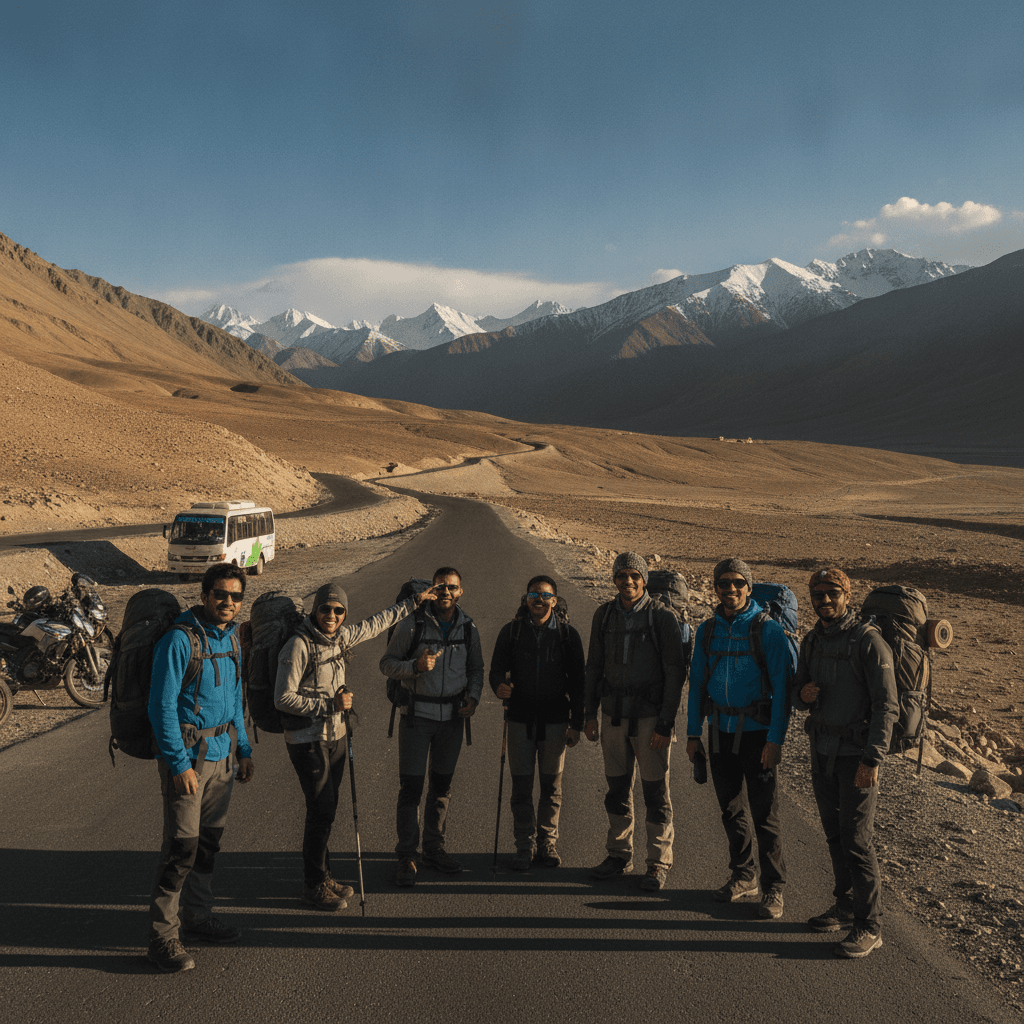
Accessing Ladakh from India primarily involves two iconic highways or direct flights to Leh. Each route offers distinct advantages and challenges, influencing the type of adventure and group trip experience. Understanding these options is paramount for planning logistics, especially when organizing a comprehensive Ladakh tour for varying group sizes and preferences.
Manali-Leh Highway: The Adventure Route
The Manali-Leh Highway, stretching approximately 475 km, is legendary for its dramatic landscapes, challenging terrain, and high mountain passes. It typically opens from early June to mid-October. This route is favored by adventure seekers, motorcyclists, and groups desiring a raw, adrenaline-pumping journey. It involves crossing five major passes: Rohtang La, Baralacha La, Nakee La, Lachulung La, and Tanglang La (the second highest motorable pass globally at 5,328 meters). The journey usually takes two days with an overnight stop in Keylong, Jispa, or Sarchu. Acclimatization is critical on this route due to rapid altitude gains, making a planned itinerary with rest stops essential for group health and safety.
Srinagar-Leh Highway: The Scenic Route
The Srinagar-Leh Highway, covering around 434 km, is often considered the more scenic and gradual ascent, making it slightly easier for acclimatization. It usually opens from late April to early November. This route traverses through picturesque valleys, charming Kashmiri villages, and the formidable Zoji La pass. Key attractions include Sonamarg, Dras (the second coldest inhabited place in the world), Kargil, and Mulbekh. Many groups prefer this route for its cultural immersion and more comfortable pace, often completing it in two days with a stop in Kargil. The gradual altitude gain makes it a preferred choice for groups with mixed fitness levels or those sensitive to rapid environmental changes.
Flying into Leh: The Quickest Option
For those with limited time or seeking to avoid the arduous road journeys, flying directly into Leh's Kushok Bakula Rimpochee Airport (IXL) is the fastest option. Flights operate year-round from major Indian cities like Delhi, Mumbai, and Srinagar. While quicker, direct flights demand immediate and stringent acclimatization protocols upon arrival in Leh, which sits at an altitude of 3,500 meters (11,500 feet). Travelers must dedicate at least 24-48 hours to complete rest and minimal activity to prevent Acute Mountain Sickness (AMS). This method is ideal for those prioritizing comfort and efficiency, but groups must adhere strictly to rest days to ensure everyone's well-being.
Sample Itineraries for Diverse Group Trips
Crafting the perfect Ladakh tour requires balancing adventure, cultural exploration, and crucial acclimatization days. Travelers Nest Community specializes in curating itineraries that cater to various group interests and durations. Here are a few examples:
7-Day Leh-Centric Cultural & Adventure Group Trip (Fly In/Fly Out)
Day 1: Arrive Leh, rest & acclimatize. Evening light stroll in Leh market.
Day 2: Leh local sightseeing (Shanti Stupa, Leh Palace, Magnetic Hill, Sangam).
Day 3: Leh to Nubra Valley via Khardung La (Hunder sand dunes, Camel ride, Diskit Monastery). Overnight in Nubra.
Day 4: Nubra to Pangong Lake via Shyok Valley. Overnight near Pangong.
Day 5: Pangong to Leh via Chang La (Thiksey Monastery, Hemis Monastery). Optional evening souvenir shopping.
Day 6: Excursion to Alchi/Likir Monasteries or River Rafting on Indus (seasonal). Or a short trek near Leh.
Day 7: Depart Leh.
10-Day Manali-Leh Road Trip with Cultural Immersion (Adventure Focus)
Day 1: Arrive Manali, rest.
Day 2: Manali to Jispa/Keylong (first leg of Manali-Leh Highway).
Day 3: Jispa/Keylong to Leh (crossing Baralacha La, Tanglang La).
Day 4: Leh, complete rest for acclimatization.
Day 5: Leh local sightseeing (Shanti Stupa, Leh Palace, Shey, Thiksey, Hemis).
Day 6: Leh to Nubra Valley via Khardung La. Overnight in Nubra.
Day 7: Nubra to Pangong Lake via Shyok. Overnight near Pangong.
Day 8: Pangong to Leh. Free evening.
Day 9: Departure Leh or optional additional activity/trek.
Day 10: Depart Leh.
12-Day Srinagar-Leh-Manali Circuit (Comprehensive Cultural & Scenic)
Day 1: Arrive Srinagar, houseboat stay, local sightseeing.
Day 2: Srinagar to Kargil (via Sonamarg, Zoji La). Overnight in Kargil.
Day 3: Kargil to Leh (Lamayuru, Alchi, Magnetic Hill). Overnight in Leh.
Day 4: Leh, full rest for acclimatization.
Day 5: Leh local sightseeing.
Day 6: Leh to Nubra Valley. Overnight in Nubra.
Day 7: Nubra to Pangong Lake. Overnight near Pangong.
Day 8: Pangong to Leh.
Day 9: Leh to Sarchu/Jispa (start of Manali-Leh Highway).
Day 10: Sarchu/Jispa to Manali.
Day 11: Manali local sightseeing/adventure activities.
Day 12: Depart Manali.
These itineraries are flexible and can be customized by Travelers Nest to match specific group interests, fitness levels, and budget constraints. The crucial element remains sufficient acclimatization days, especially in the initial phase of the trip.
Essential Preparations: Permits, Health, and Safety
A well-prepared traveler is a safe traveler, and this axiom holds especially true for Ladakh. Comprehensive planning regarding permits, health, and safety protocols is non-negotiable for any Ladakh tour, particularly for group expeditions. Neglecting these aspects can severely impact the trip's enjoyment and, more importantly, the well-being of the entire group. Devendra Singh emphasizes that proactive preparation is the bedrock of a successful high-altitude adventure.
Inner Line Permits (ILP)
Indian nationals require an Inner Line Permit (ILP) to visit certain restricted areas in Ladakh, including Nubra Valley, Pangong Tso, Tso Moriri, and Dah-Hanu. These permits are essential for accessing remote regions and ensuring compliance with local regulations. Obtaining an ILP is a straightforward online process through the official Leh administration website, typically costing around INR 500-700 per person (Source: Leh District Administration, 2024), including environmental and Red Cross fees. It is advisable to apply for permits a few days in advance or have your tour operator, like Travelers Nest, handle this for the entire group, simplifying the administrative burden and ensuring all members are covered.
Acute Mountain Sickness (AMS): Prevention and Management
Acute Mountain Sickness (AMS) is the most significant health concern in Ladakh due to its high altitude. Symptoms can range from mild headaches and nausea to severe conditions like High Altitude Cerebral Edema (HACE) or High Altitude Pulmonary Edema (HAPE). Prevention is paramount: gradual ascent, ample rest upon arrival in Leh (at least 24-48 hours), avoiding alcohol and smoking, staying hydrated, and eating light meals. For groups, it is crucial that all members are educated about AMS symptoms and encouraged to report any discomfort immediately. Carrying basic medications like Diamox (under medical advice) and pain relievers is recommended. Expert-led group tours often include a designated trip leader trained in AMS recognition and first aid, enhancing safety significantly.
Medical Preparedness and Emergency Planning
Beyond AMS, a comprehensive medical kit is essential. It should include personal medications, bandages, antiseptic, pain relievers, anti-diarrhea medication, and rehydration salts. Given the limited medical facilities in remote areas, especially for groups, having a designated first-aid responder or a medically trained guide is invaluable. Travelers Nest ensures that all its group leaders are equipped with advanced first aid training and comprehensive medical kits. Furthermore, understanding emergency evacuation procedures and having adequate travel insurance that covers high-altitude medical emergencies is critical. Mobile network coverage is sparse in many areas, making satellite phones or reliable local SIM cards for guides a vital component of emergency communication planning.
Responsible Tourism Practices
Maintaining the pristine environment and respecting the unique culture of Ladakh is the responsibility of every traveler. This includes proper waste disposal, avoiding single-use plastics, and refraining from littering. Visitors should also respect local customs, dress modestly, especially when visiting monasteries, and seek permission before photographing people. Supporting local economies by purchasing handicrafts and dining at local eateries contributes positively to the community. Travelers Nest actively promotes sustainable tourism practices within its group tours, educating participants on responsible travel ethics and minimizing environmental impact. According to a survey by the Himalayan Environmental Studies & Conservation Organization (HESCO) in 2023, tourist awareness and adherence to responsible tourism guidelines significantly reduced plastic waste by 15% in popular Ladakh circuits when promoted by tour operators.
Budgeting Your Ladakh Adventure: A Cost Breakdown
Budgeting for a Ladakh tour from India requires careful consideration, especially for young, budget-conscious travelers and group trips. While Ladakh can be perceived as an expensive destination, strategic planning and opting for group travel can significantly reduce costs without compromising the experience. This section breaks down typical expenses, offering clarity for effective financial planning.
Transportation Costs
Transportation is often the largest component of a Ladakh tour budget. Flight costs to Leh from major Indian cities can range from INR 8,000 to INR 15,000 for a round trip, depending on booking time and season. For road trips, hiring a private taxi from Manali or Srinagar to Leh costs approximately INR 15,000-20,000 one-way, which can be split among group members. Shared taxis or state-run buses are more economical, costing INR 1,500-2,500 per person. Within Ladakh, hiring a taxi for daily sightseeing ranges from INR 3,000 to INR 6,000 per day for popular routes like Nubra Valley or Pangong Lake. Group tours typically include all internal transportation, offering a predictable and often lower per-person cost.
Accommodation Options and Pricing
Ladakh offers a range of accommodation, from budget guesthouses to mid-range hotels and luxury resorts. In Leh, guesthouses or homestays average INR 1,000-2,500 per night, while mid-range hotels are INR 3,000-6,000. In Nubra Valley and Pangong, accommodation primarily consists of guesthouses or tented camps, priced at INR 1,500-4,000 per night, often including meals. Group bookings frequently qualify for discounted rates, and many group tour packages bundle accommodation, offering substantial savings. Travelers Nest curates accommodations that balance comfort, hygiene, and affordability, specifically for group travelers.
Food and Dining Expenses
Food costs in Ladakh are generally reasonable. A meal at a local restaurant or dhabha can cost INR 200-500 per person. Expect to pay more at upscale cafes or hotels. Many guesthouses and camps in remote areas offer fixed meal plans, which are convenient for groups. A daily food budget of INR 800-1,500 per person is usually sufficient for varied dining. Group tours often include breakfast and dinner, further reducing individual food expenses and simplifying meal planning in remote locations.
Activity and Permit Fees
Inner Line Permits (ILP) cost around INR 500-700 per person for a week. Entry fees to monasteries are typically INR 30-100 per person. Specific adventure activities, such as river rafting (INR 1,500-3,000), trekking guides (INR 2,000-5,000 per day), or camel rides in Nubra (INR 500-800), add to the budget. These smaller costs can accumulate, so it's important to factor them into your overall planning. Group tours often have these fees consolidated into the package price, providing transparency and preventing unexpected expenses.
Group Trip vs. Solo Travel: Cost Analysis
For a 7-day Ladakh trip, a solo traveler might spend INR 35,000-60,000 (excluding flights) on basic accommodation, shared transport, and food. A group trip, especially a curated one by platforms like Travelers Nest, can offer a comparable or even superior experience for INR 25,000-45,000 per person (excluding flights), inclusive of accommodation, internal transport, some meals, and permits. The cost savings come from shared vehicle hires, bulk accommodation bookings, and negotiated rates for activities. This makes group travel a highly attractive option for budget-conscious Indian travelers seeking a comprehensive Ladakh experience. Data from the Indian Travel and Tourism Council in 2023 indicates that organized group tours to high-altitude destinations like Ladakh are on average 20-30% more cost-effective per person than equivalent self-planned solo or small-group trips when factoring in all logistical components.
Packing for Ladakh: The Ultimate Checklist
Packing smart for Ladakh is paramount, as temperatures can fluctuate wildly, and weather conditions are unpredictable. A well-prepared backpack ensures comfort, safety, and readiness for any adventure. Overpacking is as detrimental as underpacking, especially for group trips where space and weight might be shared or limited. As Devendra Singh often advises, 'Every item in your bag must earn its space.' This detailed checklist will help you prepare for your ultimate Ladakh tour.
Clothing: Layering is Key
The golden rule for Ladakh is layering. You will experience warm sun, cold winds, and potentially freezing nights. Pack items that can be added or removed easily.
Base Layers: Thermal innerwear (top and bottom) made of merino wool or synthetic materials. Essential for retaining body heat, especially at night and during early mornings.
Mid-Layers: Fleece jackets, sweaters, or down jackets. These provide insulation and can be worn individually or together depending on the temperature.
Outer Layer: A waterproof and windproof jacket (preferably Gore-Tex or similar material). This is crucial for protection against unexpected rain, snow, or biting winds, particularly at high passes.
Bottoms: Comfortable trekking pants (quick-dry material), jeans (for evenings in Leh), and thermal leggings for colder days. Avoid cotton for trekking.
Socks: Several pairs of warm, moisture-wicking socks (wool or synthetic). Carry a mix of thin and thick socks. Two pairs of thermal socks are recommended for extreme cold.
Gloves: Warm, waterproof gloves or mittens. Consider a thin pair for dexterity and a thick, insulated pair for warmth.
Headwear: Warm woollen cap or beanie, a wide-brimmed hat for sun protection during the day, and a balaclava or neck gaiter for wind protection.
Footwear and Accessories
The right footwear is critical for navigating varied terrains, from monastery steps to light treks.
Hiking Boots: Sturdy, waterproof, ankle-supportive hiking boots are ideal. Ensure they are well broken-in to avoid blisters.
Casual Shoes/Sandals: A pair of comfortable sneakers or sandals for evenings in Leh or short strolls.
Sunglasses: UV-protected sunglasses are essential to protect your eyes from intense high-altitude sunlight and glare, especially on snow.
Sunscreen: High SPF (50+) sunscreen is a must to prevent severe sunburn.
Lip Balm: With SPF, to prevent chapped lips in dry, cold air.
Backpack: A comfortable trekking backpack (40-60 liters) for your main luggage and a smaller daypack (15-25 liters) for daily essentials.
Water Bottle/Hydration Pack: Reusable to stay hydrated and reduce plastic waste. Consider a thermos for hot water.
Personal Care and Medical Kit
Beyond standard toiletries, a specialized medical kit is non-negotiable.
Basic Toiletries: Toothbrush, toothpaste, biodegradable soap, shampoo, moisturizer (for dry skin), hand sanitizer.
Personal Medications: Any prescribed medications, plus general pain relievers (Paracetamol, Ibuprofen), anti-inflammatory ointment, anti-diarrhea medication, antacids, and a basic cold/flu remedy.
AMS Medication: Diamox (Acetazolamide) – consult your doctor before carrying or consuming this, as it's a prophylactic for AMS.
First Aid Essentials: Band-aids, antiseptic wipes, sterile gauze, medical tape, small scissors, blister treatment kit.
Oxygen Canisters: Small portable oxygen cans can provide temporary relief in case of mild AMS symptoms, especially for group members who might struggle. These are often carried by group tour leaders.
Electronics and Documentation
Ensure your gadgets are protected and essential documents are accessible.
Power Bank: Essential for charging devices where electricity might be scarce or intermittent, especially in remote camps.
Camera & Extra Batteries: Cold weather drains battery life quickly. Carry multiple fully charged batteries.
Headlamp/Flashlight: Crucial for navigating camps or areas with no electricity.
Documents: Original and photocopies of ID proof (Aadhaar/Passport), Inner Line Permits, travel insurance, flight/tour booking confirmations. Keep digital copies on your phone and cloud storage.
Cash: ATMs are limited outside Leh. Carry sufficient cash for smaller expenses, local purchases, and emergencies.
The Power of Group Travel for Ladakh Explorations
For the target audience of young, experience-driven, and budget-conscious Indian travelers, group trips to Ladakh offer an unparalleled blend of adventure, affordability, and social connection. This model, championed by platforms like Travelers Nest, addresses specific needs that solo or independent travel often overlooks in a challenging destination like Ladakh. The benefits extend far beyond simple cost-sharing, creating a holistic and enriched travel experience.
Enhanced Safety and Support
Ladakh's high altitude and remote terrain present inherent risks, including Acute Mountain Sickness (AMS), unpredictable weather, and limited medical facilities. Group travel, especially with an experienced operator, significantly mitigates these risks. Group leaders are trained in first aid, AMS management, and emergency protocols, providing immediate assistance and expert decision-making. The presence of a group also offers psychological comfort and mutual support, which is invaluable in challenging situations. In a 2022 study by the Indian Council of Medical Research on high-altitude tourism, organized group tours reported 40% fewer medical emergencies requiring external intervention compared to independent travelers, primarily due to guided acclimatization and prompt symptom recognition.
Shared Experiences and Social Connection
One of the primary drivers for young travelers opting for group trips is the desire for social connection. Ladakh's breathtaking landscapes and arduous journeys become even more memorable when shared with like-minded individuals. The camaraderie built during long road trips, shared meals, and collective triumphs over challenging terrains fosters strong bonds and lasting friendships. Travelers Nest actively cultivates this community aspect, ensuring groups are composed of individuals with similar interests, enhancing the overall social dynamic. This shared narrative transforms a mere trip into a collective adventure, a core appeal for those seeking meaningful travel experiences.
Cost Efficiency and Resource Pooling
Group travel inherently offers significant cost advantages, a crucial factor for budget-conscious students and young professionals. Expenses like vehicle hire, accommodation, and guiding services are dramatically reduced when shared among multiple participants. Tour operators can leverage bulk booking discounts for flights, hotels, and activities, passing these savings onto individual travelers. For example, a private SUV for a Leh-Nubra-Pangong circuit might cost INR 18,000-25,000 for a small group, translating to INR 3,000-5,000 per person for a group of five, far more economical than individual taxi fares. This financial efficiency makes a dream destination like Ladakh more accessible, turning aspirational travel into a reality.
Expert Guidance and Local Insights
Navigating Ladakh’s complex logistics, cultural nuances, and hidden gems requires local expertise. Group tours come with experienced guides who provide invaluable insights into local culture, history, and geography, enriching the travel experience beyond what guidebooks can offer. They handle all permits, itinerary adjustments, and local interactions, allowing travelers to immerse themselves fully without logistical worries. Devendra Singh's experience highlights that local guides can introduce travelers to authentic experiences, like traditional Ladakhi meals in local homes or lesser-known monastic festivals, which are often inaccessible to independent travelers. This curated access to local life is a significant value addition for experience-driven explorers.
Navigating Group Dynamics for a Seamless Trip
While group travel offers numerous benefits, successful execution relies on effective management of group dynamics. Travelers Nest focuses on creating cohesive groups by aligning trip themes with participant interests and providing clear communication channels. A good group leader plays a pivotal role in resolving minor conflicts, fostering inclusivity, and ensuring everyone's needs are met. This often involves daily check-ins, flexible activity options, and promoting an understanding of collective responsibility. Based on working with diverse groups, Devendra Singh notes that clear expectations set at the outset, combined with a 'we're all in this together' mindset, are critical for turning potential challenges into shared adventures.
Customizing Your Ladakh Adventure: Beyond the Brochure
While standard itineraries cover the popular highlights, the true spirit of an ultimate Ladakh tour lies in customizing it to match your group's unique adventure quotient and cultural interests. For experience-driven travelers, this means going beyond the well-trodden paths to discover niche activities and deeper cultural engagements. Travelers Nest excels in tailoring Ladakh experiences, ensuring every group trip is as unique as its members.
Adventure Activities for the Thrill-Seeker
Ladakh is an adventure playground. Beyond the iconic road trips, groups can incorporate specific thrill-seeking activities:
Trekking: From short day hikes around Leh to multi-day high-altitude treks like Markha Valley or Lamayuru-Chilling. The Chadar Trek in winter offers an extreme challenge for experienced trekkers. Group treks benefit from shared permits, guides, and porters, making logistics smoother.
River Rafting: Experience white-water rafting on the Indus River (grade II-III) near Leh or the Zanskar River (grade III-IV) for more intense rapids. This is a popular group activity during summer months.
Mountain Biking: Explore the challenging terrains on two wheels. Routes like Khardung La to Leh or the Leh-Manali Highway offer exhilarating descents. Specialized group tours with support vehicles are available.
Motorbiking Expeditions: For groups of bikers, a self-supported or guided motorbiking tour across the Manali-Leh or Srinagar-Leh highway is the ultimate adventure. Travelers Nest assists with bike rentals and support logistics.
Cultural and Spiritual Immersion
Ladakh's rich Buddhist heritage offers profound opportunities for cultural and spiritual exploration:
Monastery Visits: Beyond Hemis, Thiksey, and Diskit, explore lesser-known gompas like Phugtal Monastery (requires a trek), Rizong, or Sumda Chun for a deeper dive into monastic life.
Homestays: Opt for homestays in remote villages (e.g., in Turtuk, Aryan Valley) to experience authentic Ladakhi hospitality, cuisine, and daily life. This is a powerful way for groups to connect with local communities.
Local Festivals: Plan your trip around vibrant festivals like Hemis Tsechu, Phyang Tsedup, or Ladakh Festival to witness traditional masked dances (Cham) and cultural performances. These events offer a unique insight into Ladakhi traditions.
Art and Craft Workshops: Participate in workshops for Thangka painting, pottery, or traditional Ladakhi weaving, offering a hands-on cultural experience.
Offbeat Destinations and Hidden Gems
For those seeking solitude and untouched beauty, Ladakh offers numerous hidden gems:
Aryan Valley (Dah-Hanu): Home to the Brokpa community, believed to be direct descendants of Alexander's army. Their unique culture, traditions, and distinct physical features are fascinating. Special permits are required.
Hanle: Known for the Hanle Observatory, one of the world's highest astronomical observatories. This remote village offers incredible stargazing opportunities and a serene environment.
Tso Moriri Lake: A less-visited but equally stunning high-altitude lake, designated as a Ramsar Wetland Reserve. It’s a breeding ground for migratory birds and offers a tranquil alternative to Pangong Tso.
Zanskar Valley: A rugged and remote valley, accessible via a challenging road from Kargil or through treks. It offers dramatic landscapes, ancient monasteries, and unique cultural experiences.
Customizing a group trip requires a tour operator that understands these diverse interests and can seamlessly integrate them into a coherent itinerary. This is where the expertise of Travelers Nest becomes invaluable, transforming a standard tour into a truly personalized adventure.
Travelers Nest: Your Partner in Ladakh Exploration
For young, budget-conscious, and experience-driven Indian travelers seeking adventure and social connection, Travelers Nest Community stands out as the ideal partner for planning ultimate Ladakh tours. Our platform is specifically designed to address the unique demands of this demographic, offering curated experiences that prioritize community, affordability, and hassle-free planning. We believe that an epic adventure should not be a luxury but an accessible reality for everyone.
Travelers Nest leverages its expertise to craft comprehensive Ladakh packages that cover all critical aspects: from meticulously planned itineraries that incorporate sufficient acclimatization days to handpicked accommodations and reliable transportation. Our group trips are led by experienced guides who are not just navigators but also facilitators of memorable experiences, ensuring safety, sharing local insights, and fostering a vibrant group dynamic. We understand the value of shared moments, which is why our tours are structured to encourage interaction, collaboration, and collective discovery among participants.
Moreover, our commitment to affordable pricing ensures that the dream of exploring Ladakh is within reach. By aggregating demand and negotiating favorable rates, we make high-quality adventure travel economically viable. We handle all logistical complexities, including Inner Line Permits, ensuring a seamless and stress-free journey from start to finish. Choosing Travelers Nest means opting for a community-driven adventure where you connect with like-minded explorers, embark on expertly guided expeditions, and create unforgettable memories in the majestic landscapes of Ladakh. Join us to transform your Ladakh aspirations into a tangible, exhilarating reality.
Conclusion: Your Ladakh Journey Awaits
Planning the ultimate Ladakh tour for adventure and group trips from India demands meticulous attention to detail, from understanding seasonal variations and choosing optimal routes to prioritizing health, safety, and budget. The shift towards community-first adventure travel, especially among young Indian travelers, underscores the growing value of shared experiences and expert-led expeditions in challenging destinations like Ladakh. As Devendra Singh's insights confirm, the collective journey often surpasses the solitary one in terms of richness and impact.
Whether you choose the thrilling Manali-Leh Highway, the scenic Srinagar-Leh route, or a direct flight to Leh, proper acclimatization remains paramount. Comprehensive packing, diligent permit acquisition, and a proactive approach to health and safety form the bedrock of a successful trip. For those seeking a blend of affordability, social connection, and hassle-free adventure, curated group tours like those offered by Travelers Nest Community provide an unparalleled pathway to explore Ladakh's majestic beauty and cultural depth. Your ultimate Himalayan adventure is not just a destination; it's a journey of discovery, camaraderie, and unforgettable moments waiting to unfold.
Frequently asked questions
What is the best time to visit Ladakh for group adventure trips?
The best time for group adventure trips to Ladakh is from June to September. During this period, both major highways (Manali-Leh and Srinagar-Leh) are open, weather conditions are pleasant for various activities, and all major attractions are accessible, making it ideal for group logistics and diverse interests.
How many days are ideal for a Ladakh tour from India?
An ideal Ladakh tour from India typically spans 7 to 10 days. This duration allows for adequate acclimatization in Leh (2-3 days), covers major attractions like Nubra Valley and Pangong Lake, and provides time for either a comfortable road journey or a few adventure activities, ensuring a comprehensive experience without rush.
What are the primary challenges of planning a Ladakh tour for a group?
Primary challenges for planning a group Ladakh tour include coordinating diverse fitness levels for acclimatization, managing varied interests for itinerary design, ensuring collective adherence to safety protocols (especially AMS prevention), and streamlining logistics like permits and transportation for multiple individuals. Expert-led group tours mitigate these complexities.
Are Inner Line Permits (ILP) required for Indian citizens visiting Ladakh?
Yes, Indian citizens require Inner Line Permits (ILP) to visit specific restricted areas in Ladakh, such as Nubra Valley, Pangong Tso, and Tso Moriri. These can be obtained online through the Leh administration website or facilitated by your tour operator, and are essential for legal access and smooth travel within these regions.
How much does a budget-friendly group trip to Ladakh from India typically cost?
A budget-friendly group trip to Ladakh from India, excluding flights, can typically cost between INR 25,000 to INR 45,000 per person for a 7-day tour. This usually includes accommodation, internal transportation, some meals, and permits, offering significant savings compared to solo travel due to shared expenses and negotiated group rates.
Written by
Devendra Singh
Travel Blogger & Content Creator · Travel Enthusiast, 6+ Years Experience in Travel & Tourism
Devendra Singh is a passionate traveler and content creator who loves exploring offbeat destinations and sharing practical travel guides. With 6+ years of experience in the travel industry, he specializes in budget travel, adventure trips, and creating memorable experiences for travelers across India.